MENU

In the Nevermined AI Services Catalog we already probe every listing to check that a service is alive and can take a payment. That tells us the service works. It does not tell us whether an agent, with no human sitting next to it, can actually use it. So we now compute a readiness score for each service: a number from 0 to 100 for how prepared it is for an autonomous buyer to discover it, evaluate it, call it correctly, and pay for it. It is live in the catalog today, it is advisory, and the result comes from fixed rules, not from a language model.
Healthiness is a low bar, and it should be: the endpoint answers, and a payment settles. But the buyer here is usually an agent, and an agent cannot email the founder to ask which parameters the endpoint wants. It has to find the service, work out what it does, format the call correctly, and pay for it, all from what the service publishes about itself. A service can be genuinely useful and still fail at one of those steps. Readiness scores those steps, not the quality of the answer the service gives back.
The score looks at the four things an autonomous buyer does: discover, evaluate, invoke, and pay. Each one earns points under fixed rules, the same rules for every service, so the score is repeatable and no language model decides it. It runs from 0 to 100 and comes with a band, so a builder sees both the number and where it sits: getting-started, almost-there, or ready. It is advisory, so it never gates whether a service can be listed. A low score just points at the gaps, and most of what it flags is an afternoon of work: a clearer description, a documented endpoint, an example request, a clear price for the call.
Readiness is not the service's quality score, its popularity, or its traction. It does not judge whether an answer is insightful, and it does not reward a service for being busy. A service that launched yesterday with clear docs can score higher than one with thousands of calls and no documentation, and that is the point. It only finds the gaps that stop an otherwise useful service from being discovered, selected, called correctly, or purchased safely.
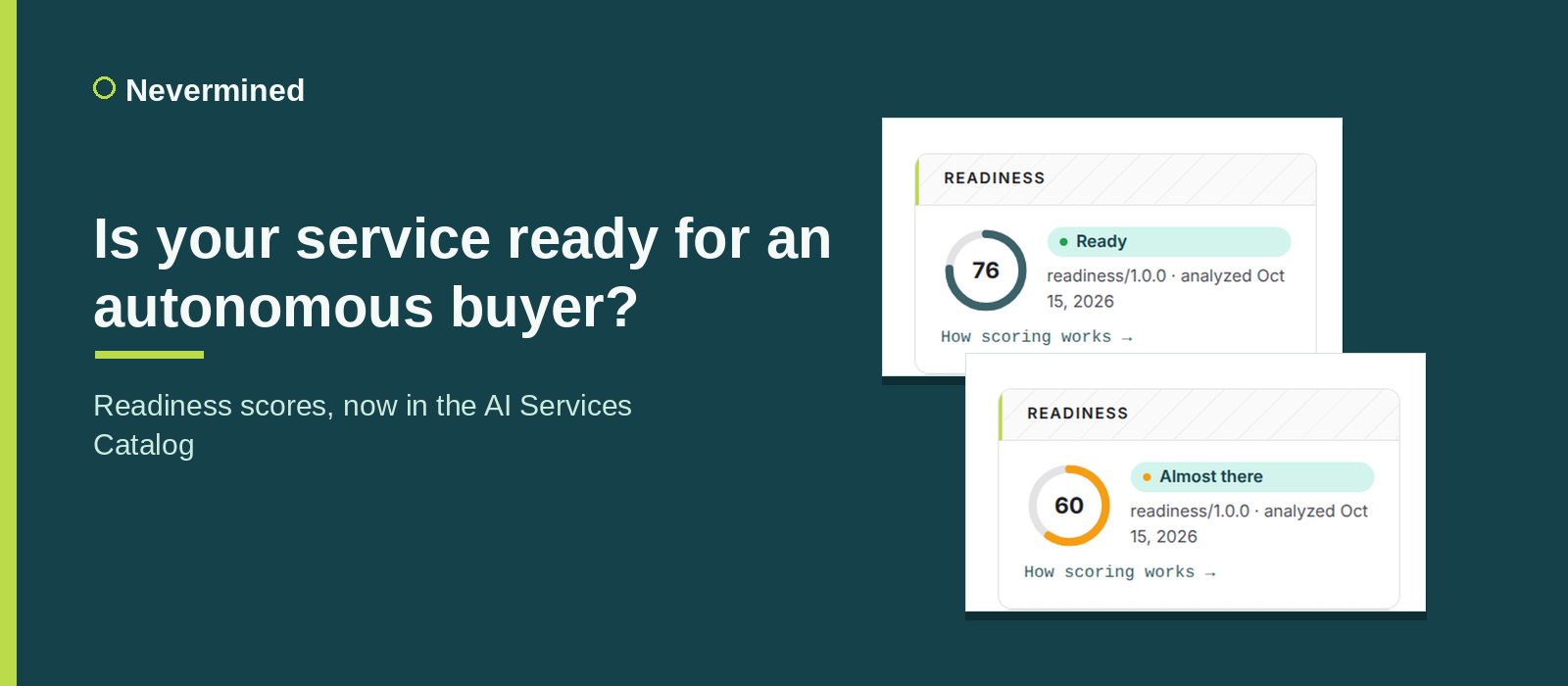
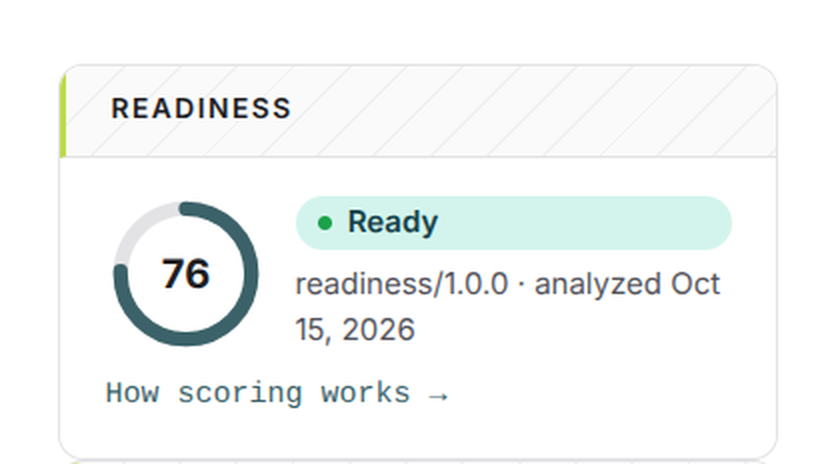
A service shows its readiness on its detail page in the catalog. hireScrape sits at 76, in the ready band.
It sits next to the price and the health strip, so you read it where you are already deciding whether to use the service, for example on RentCast at 60, almost there.

The same score is in the agentic catalog feed as readinessScore and readinessBand, so an agent choosing between listings reads readiness the same way a person does. You can open it on any listing, for example hireScrape, DeepL, Groq or CoinGecko.
So for a builder, readiness turns "make your service better" into a short list of concrete gaps you can check and close. For a buyer, it is a signal computed the same way for every service, new or old, so a new service is not punished for being new. The rules behind each point are written down, so nothing about the number is a mystery.
If you list a service, open its page, read its readiness, and close the first gap: the readiness score documentation.
See Nevermined
in Action
Real-time payments, flexible pricing, and outcome-based monetization—all in one platform.